

 Tiếng Việt
 中文 (中国)
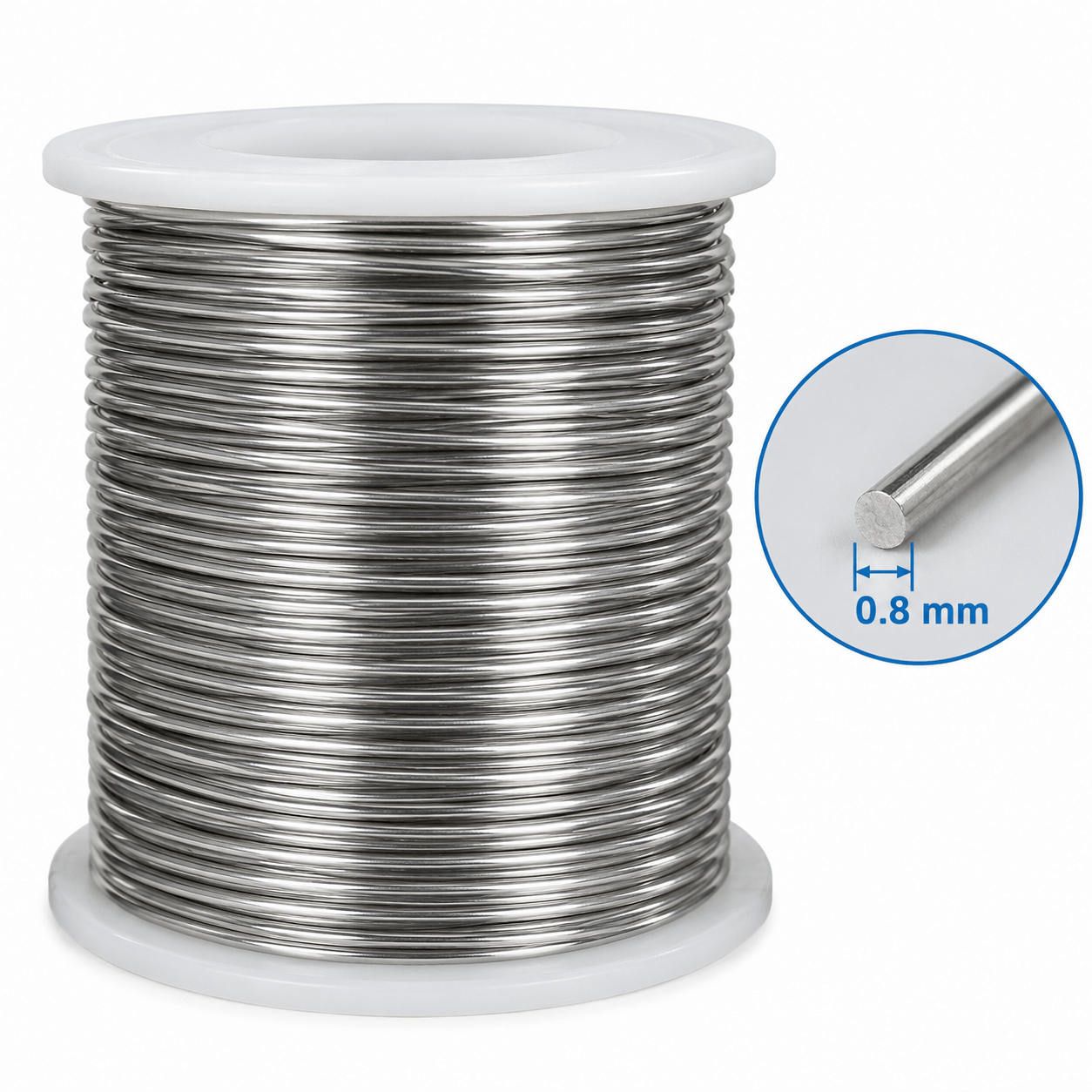

Lead-based solder wire is a type of solder wire made from an alloy of tin and lead (commonly in a 63/37 or 60/40 ratio) and is available in various wire diameters. It is characterized by its low melting point and excellent solderability. For working with electrical and electronic components, the 63/37 ratio (Sn63Pb37) is widely preferred due to its excellent soldering performance.
Features
- Alloy Composition: primarily composed of tin (Sn) and lead (Pb), sometimes with a rosin flux core inside to improve solderability and adhesion.
- Melting point: low (~183°C – 190°C), allowing for fast and efficient soldering of electronic components.
- Strength: bright and smooth solder joints, good adhesion, easy to use and cost-effective
- Weakness: solder fumes containing lead can be harmful to health if inhaled regularly, especially in poorly ventilated environments.
Characteristics
Lead-based solder wire is commonly used in:
1. Electronic Circuit Assembly and Repair
- Through-Hole Component Soldering (THD): Used to secure component leads, such as resistors, capacitors, and transistors, to printed circuit boards (PCBs).
- Household Appliance Repair: Used to repair loose or broken solder joints in televisions, refrigerators, washing machines, electric fans, and other household appliances.
- Audio Equipment Assembly: Used for soldering signal wires, connectors, speakers, and amplifiers, as lead-based solder provides stable electrical conductivity and helps minimize interference.
2. Automotive and Motorcycle Industry
- Wiring System Soldering: Used to connect wire harnesses and connectors in vehicle horns, lighting systems, and sensors.
- Control Unit Repair: Used to repair cracked or damaged solder joints on control circuit boards, particularly in older vehicles.
3. DIY and Personal Projects
- Learning and Research: Commonly used by students and beginners in electrical and electronics training because of its affordable cost and excellent solderability.
- Hardware Modding: Used for building mini robots, Arduino circuits, LED modifications, mechanical keyboards, and other DIY electronic projects.
4. Mechanical and Handcraft Applications
- Copper Pipe Soldering: Some larger-diameter solder wires may be used to join water pipes or copper refrigeration pipes. However, lead-based solder is increasingly restricted for applications involving potable water due to health and safety concerns.
- Craft and Decorative Assembly: Used for soldering small copper, iron, or zinc components in the production of artistic stained-glass pieces and other metal crafts.
In the past, lead-based solder was widely used as an industry standard. However, health and environmental concerns associated with lead have made it less common in many applications. As a result, lead-based solder wire and solder bars are generally more cost-effective than lead-free solder materials.
The use of lead-based solder depends on the specific application and technical requirements. It is suitable for repair work, prototyping, and general electronic circuit production where stringent environmental regulations such as RoHS compliance are not required. It offers an economical solution while providing reliable electrical conductivity and excellent solderability.
However, when using lead-based solder, proper health and safety measures are essential. Lead exposure and flux fumes may pose risks to the respiratory and nervous systems, particularly with prolonged or repeated exposure. Adequate ventilation, appropriate personal protective equipment, and proper handling procedures should therefore be implemented.
_______________________________________________
Contact us for technical support, product samples, and quotes for genuine products.
📩: vnm158@gmail.com / sales03@vimota-vn.com
📞: +84 98 557 1698 / +84 969 879 218
